
Fine Motor Activities for Toddlers: 7 Easy Ideas to Try at Home
Here’s a little OT secret: some of the best fine motor activities for toddlers use things already in your kitchen drawer or toy bin. No fancy kits needed. Just a few minutes, a little mess and you, playing along.
What are fine motor skills?
Fine motor skills are the small, precise movements of the hands and fingers. Toddlers use them all day: picking up a snack, turning a page, pulling off socks and scribbling with a crayon. Later, the same skills support buttons, scissors and handwriting. They grow on a base of hand strength, steady shoulders and wrists, both hands working together, and hand-eye coordination.
7 fine motor activities for toddlers
Safety first: toddlers explore with their mouths. Use items too big to swallow, check age labels (small parts aren’t safe for kids under 3), and stay close the whole time.
1. Stacking cups
The simple toy OTs reach for again and again! Stacking, nesting and knocking down cups practices reaching, grasping and letting go on purpose, plus two-handed play. Start with a tower of two or three cups. Older toddlers can nest them from biggest to smallest, or hide a toy under one and play “where did it go?”
2. Pom-pom transfer
Squeezing and letting go works the same small hand muscles kids later use to hold a pencil. Have your toddler move large pom-poms from a bowl into a muffin tin, first with fingers, then with kid-sized tongs. Preschoolers can try tweezers and sort by color.
3. Playdough
Squish it, roll it, pinch it, poke it. Rolling a “snake” gets both hands working together, and pinching off small pieces builds fingertip strength. Pressing cookie cutters or a plastic knife into the dough is great early tool practice.
4. Chunky lacing
Threading builds hand-eye coordination and two-handed skills. Start with something easy, like large wooden lacing beads or rings cut from a paper towel tube, on a thick, stiff lace. Wrapping tape around the tip of a shoelace makes a handy “needle.”
5. Buttons, zippers and snaps
Getting dressed on their own comes one small step at a time. OT tip: unbuttoning usually comes before buttoning, so start there. Let your toddler practice big zippers and snaps on a jacket laid flat on the table, or “post” large plastic lids through a slot cut into a container lid.
6. Kitchen helper jobs
The kitchen is full of real-life practice:
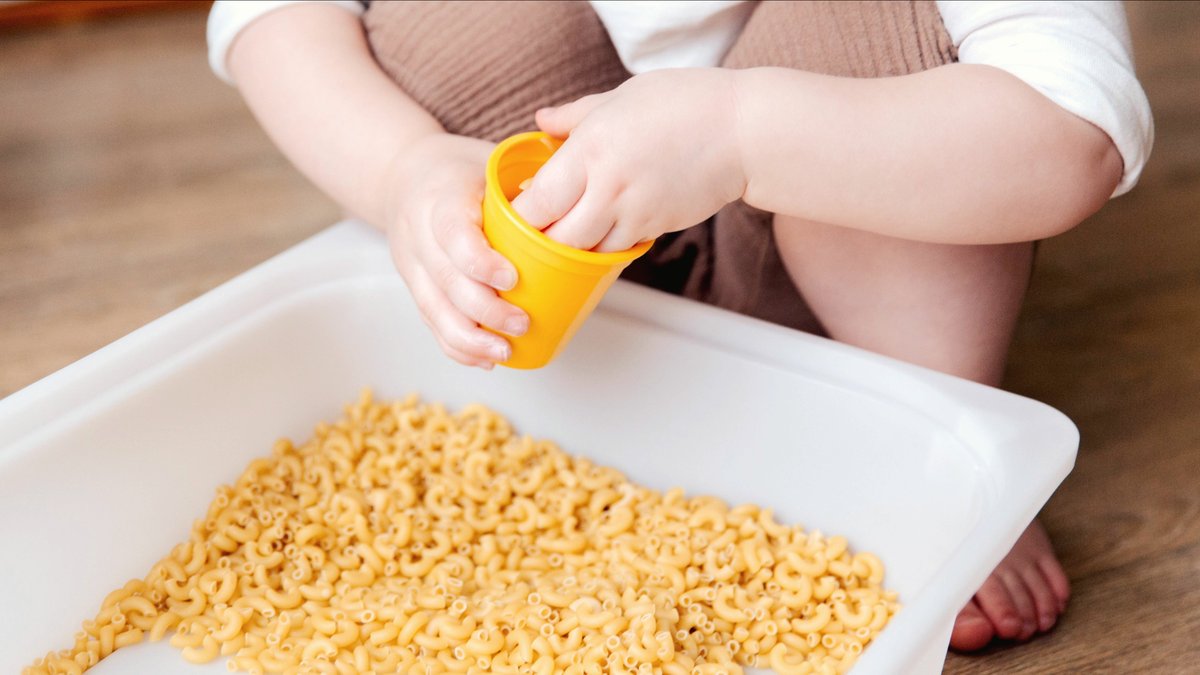
- Scoop and pour: a bin of dry pasta with cups and spoons is simple sensory play (supervise closely)
- Stir and spread: stirring batter or spreading soft foods builds wrist control
- Tear and wash: tearing lettuce or washing veggies keeps busy hands happy
Bonus: helping in the kitchen is a gentle, no-pressure way for picky eaters to get to know new foods.
7. Work on a wall
Tape paper to the wall or fridge and scribble with chunky crayons, or stick and peel large stickers up high. Working on an upright surface helps build shoulder and wrist stability, the “steady base” hands need for coloring and, later, writing.
Tips to keep it fun
- Keep it short. Five or ten minutes of play beats a long, frustrating stretch.
- Follow your child’s lead. If they love the pom-poms, stick with the pom-poms.
- Celebrate effort, not perfection. Messy is normal, and every try counts as practice.
Frequently asked questions
At what age do toddlers start using fine motor skills?
Right away! Babies start by grasping and reaching, and toddlers move on to stacking, scribbling, turning pages and using a spoon. Every child grows at their own pace.
How often should we do fine motor activities?
There’s no magic number. Short, playful moments built into the day, like stirring at dinner or zipping a jacket, add up over time.
When should I talk to an OT about my toddler’s fine motor skills?
If your toddler avoids hands-on play, gets very frustrated with everyday tasks like eating or dressing, or seems to have a harder time than other kids the same age, an occupational therapist can take a closer look.
Fine motor support in North Miami Beach
These activities may help any child build hand skills through play. At Interactive Therapy Solutions, we look beyond the diagnosis to see each child’s strengths, then use play, creativity and close teamwork with families to support the skills that matter in everyday life. Learn about one-on-one pediatric occupational therapy for fine motor skills, find answers to common questions about getting started, or send us a message.
Have questions? Call or text us at 786-805-6454.