
Pediatric occupational therapy
Pediatric Occupational Therapy in North Miami Beach
Occupational therapy (OT) can help children take part in the everyday activities that matter to them, such as playing, learning, getting dressed, eating, and managing their emotions. Occupational therapists call these activities occupations1,2.
We work with children and young adults ages 0–21 from North Miami Beach, Aventura, and across Miami.

Why families choose us
- Serving families since 2012
- Supporting growth, building independence
- Clinic and teletherapy options
- Insurance or private pay
What OT addresses
What pediatric occupational therapy addresses
AOTA’s practice framework describes the areas of daily life that OT supports1. For children, these include:
- Activities of daily living (ADLs): basic self-care such as dressing, eating, toileting, and hygiene.
- Instrumental activities of daily living (IADLs): managing belongings, routines, and simple chores.
- Play and leisure: exploring, playing, and enjoying activities.
- Education: school participation, including handwriting and classroom tasks.
- Social participation: activities with family and peers.
- Rest and sleep: routines that support healthy rest.
Occupational therapists also look at the underlying skills involved, such as motor skills, sensory processing, and planning1.
Who we help
Children we work with
We work with children and young adults ages 0–21, with or without a diagnosis. Every plan starts with your child’s strengths, the activities that feel hard right now, and your family’s goals.
Diagnoses we often see
- Autism
- ADHD
- Developmental delays
- Sensory processing differences
- Developmental coordination disorder (DCD)
- Cerebral palsy
- Down syndrome
- Other genetic conditions
- Born prematurely
- Intellectual disability
- Learning differences
- Handwriting difficulties
- Feeding difficulties
- Anxiety and emotional regulation
- No formal diagnosis
Areas we address
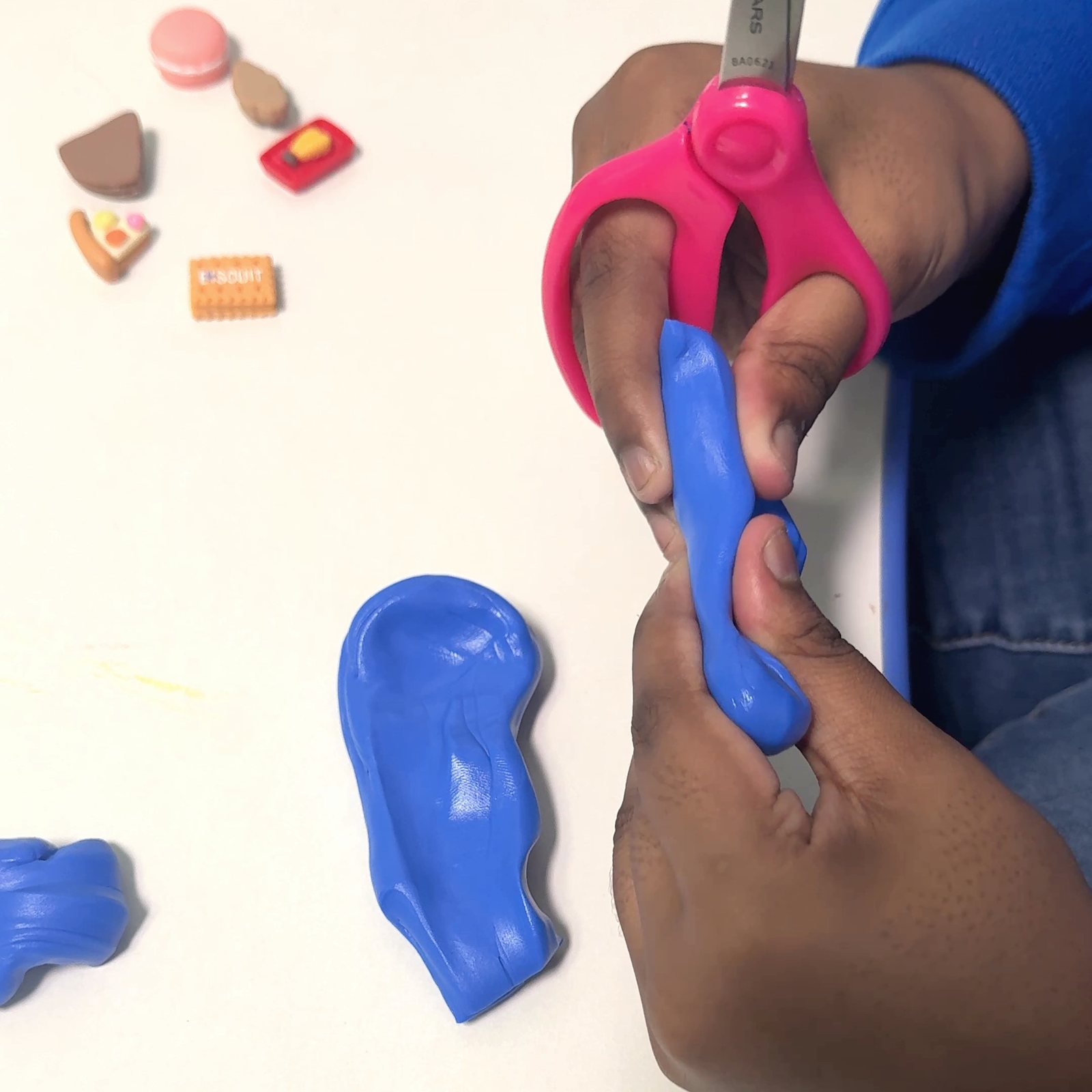
- Fine motor & handwritingpencil grip, scissors, buttons, using both hands together, and writing that is easier to read
- Visual-motor & visual-perceptual skillscopying shapes and letters, puzzles, and hand-eye coordination
- Sensory processing & self-regulationfeeling calm, comfortable, and ready to take part
- Self-feeding & mealtime skillsfinger feeding, utensils and cups, new food textures, and family mealtimes
- Self-care & daily routinesdressing, toileting, brushing teeth, and getting ready in the morning
- Play & social participationjoining in, taking turns, and playing with others
- Gross motor skills & motor planningbalance, ball skills, climbing, and learning new movements
- Attention & executive functioningplanning, organizing, and following steps through to the end
- Thinking & problem-solvingfollowing directions, sequencing, and working through challenges
- School readinessclassroom routines, sitting for group time, and early writing skills
Don’t see your child’s needs listed? Every child is different, and these lists aren’t complete. Contact us to discuss what you’re noticing and whether an occupational therapy evaluation may be helpful.
Areas we help with
Areas we help with
Sensory processing
Common concerns: strong reactions to noise, clothing, textures, or movement; avoiding messy play; seeking constant movement; difficulty staying calm in busy places.
Some children respond to sound, touch, or movement more or less intensely than others, which can make daily routines harder. These differences can have many causes; an occupational therapy evaluation can help identify factors affecting your child’s participation in everyday activities, and therapy can support more comfortable participation at home and school.
Fine motor skills and handwriting
Common concerns: an immature pencil grasp; handwriting that is slow, hard to read, or tiring; difficulty with scissors, buttons, or zippers; letter reversals.
Handwriting difficulties are among the most common reasons children are referred to occupational therapy6. Goals may focus on hand strength, coordination, visual-motor skills, and structured handwriting practice.
What the research shows: Research supports structured, task-specific handwriting interventions to improve children’s handwriting performance6. Studies have found improvements in handwriting legibility when children participate in programs that incorporate direct handwriting practice and repeated opportunities to develop their skills7.
Self-feeding and mealtime skills
Common concerns: strong reactions to certain food textures or messy hands; difficulty with finger feeding, utensils, or drinking from a cup; trouble sitting steadily at the table; stressful mealtimes.
Mealtimes draw on many everyday skills. We look at how a child’s sensory responses, hand skills, oral-motor control, and posture may affect eating and drinking, and goals may include tolerating new textures, self-feeding with fingers, utensils, and cups, and calmer mealtime routines for the family. Swallowing concerns may need a medical or speech-language pathology evaluation.
What the research shows: A systematic review of feeding interventions for children from birth to 5 years found that several approaches, including parent-directed and educational approaches, may improve feeding performance and parent–child interaction at mealtimes8.
Self-care and daily living skills
Common concerns: needing more help than peers with dressing, toileting, brushing teeth, or other daily routines.
Self-care skills are an important part of a child’s independence. We break each task into manageable steps and practice them in ways that carry over to home routines.
What the research shows: For children and youth ages 5–21, a systematic review found evidence that practicing the actual activity, in different settings and with coaching and feedback, may improve daily living skills9.
Executive functioning
Common concerns: difficulty planning, organizing materials, remembering steps, switching between tasks, or completing work.
Executive functioning refers to the thinking skills used to plan, organize, and complete tasks. Therapy can support these skills with practical strategies, such as visual schedules, checklists, and organized routines, for home and school.
What the research shows: A systematic review of pediatric OT interventions rated cognitive approaches, such as CO-OP and coaching, among those with the strongest supporting evidence5.
Self-regulation
Common concerns: difficulty calming down after being upset; frequent frustration during daily tasks; trouble with transitions or changes in routine.
Self-regulation is a child’s ability to manage attention, emotions, and energy to match the situation. We look at how sensory processing, routines, and daily demands may affect a child’s ability to stay calm and engaged, and practice strategies such as movement breaks and predictable routines, with ideas families can use at home.
What the research shows: A systematic review suggests that cognitive and occupation-based interventions may support self-regulation in children with sensory processing challenges, although few studies were available10.
Motor skills and coordination
Common concerns: delays in rolling, crawling, or walking; difficulty with running, jumping, catching, or riding a bike; poor posture at the table.
We support gross motor skills (large movements) and coordination needed for play, sports, and classroom participation.
What the research shows: For children ages 0–5, a 2020 systematic review found moderate to strong evidence that some OT interventions may improve motor performance11.



Quick check
When to consider an OT evaluation
Children develop at different rates. The CDC’s milestone checklists list skills that most children (75% or more) show by a certain age, such as holding a crayon between the fingers and thumb by age 412. If your child has not reached milestones, has lost skills, or you have other concerns, the CDC recommends talking with your child’s doctor12. An occupational therapy evaluation can help identify factors affecting your child’s participation in everyday activities.
Where we provide therapy
- In our clinic at 909 N Miami Beach Blvd, Suite 503, North Miami Beach
- Teletherapy (secure video sessions), when appropriate for your child’s goals
- At select partner schools in our area
Getting started
How to get started
Getting started is simple: reach out, we’ll help with insurance or private-pay details, and an evaluation guides the plan. See how it works →
Serving our community
Pediatric occupational therapy for North Miami Beach, Aventura, and Miami families
Our clinic at 909 N Miami Beach Blvd, Suite 503, North Miami Beach, is convenient for families in Aventura, North Miami, Sunny Isles Beach, Miami Gardens, and across Miami.
Parent reviews
What families say
“
I would recommend Interactive for occupational therapy; I can see a difference in my child’s handwriting and focus with during homework. His teacher has also noticed a difference.
Helen B. · Parent
“
Everyone in the office was always welcoming and you could feel the love and energy that they loved their job. … My daughter LOVED her sessions … Thank you ladies for making a difference!
Nicole G. · Google review
Common questions
Occupational therapy FAQs
What does a pediatric occupational therapist do?
A pediatric occupational therapist supports children in building the skills they need for daily activities, such as self-care, play, school tasks, and eating, using meaningful, hands-on activities1,2.
How do I know if my child needs OT?
If everyday tasks are harder for your child than for other children the same age, or your child has not reached expected milestones, an evaluation can help identify factors affecting their participation12.
Does my child need a diagnosis?
No. We work with children with and without a diagnosis.
Do I need a referral?
Private-pay families do not need a referral. For insurance-covered services, a doctor’s referral or prescription may be required. We’ll help you understand what your plan needs.
How often and how long are sessions?
Frequency and session length are determined after the comprehensive evaluation, based on your child’s goals.
How soon can therapy start?
We’ll verify your insurance benefits for you, usually within two business days. Private-pay families do not need to wait for insurance approval. Once the evaluation is complete, therapy can be scheduled based on your child’s needs and appointment availability.
Will I be involved?
Yes. Parents are part of the team. We review goals and progress with you and share strategies to use at home.
More questions? Read our full FAQ or call us.
Schedule an evaluation
Tell us about your child: call or text us at 786-805-6454.
View references (12)
- American Occupational Therapy Association. Occupational Therapy Practice Framework: Domain and Process, Fourth Edition. Am J Occup Ther. 2020;74(Suppl 2):7412410010. doi.org/10.5014/ajot.2020.74S2001
- American Occupational Therapy Association. What is occupational therapy? aota.org/about/what-is-ot
- Tomchek SD, Koenig KP. Occupational Therapy Practice Guidelines for Individuals With Autism Spectrum Disorder. Bethesda, MD: AOTA Press; 2016. library.aota.org
- Blank R, Barnett AL, Cairney J, et al. International clinical practice recommendations on the definition, diagnosis, assessment, intervention, and psychosocial aspects of developmental coordination disorder. Dev Med Child Neurol. 2019;61(3):242–285. doi.org/10.1111/dmcn.14132
- Novak I, Honan I. Effectiveness of paediatric occupational therapy for children with disabilities: a systematic review. Aust Occup Ther J. 2019;66(3):258–273. doi.org/10.1111/1440-1630.12573
- Hoy MM, Egan MY, Feder KP. A systematic review of interventions to improve handwriting. Can J Occup Ther. 2011;78(1):13–25. doi.org/10.2182/cjot.2011.78.1.3
- Engel C, Lillie K, Zurawski S, Travers BG. Curriculum-based handwriting programs: a systematic review with effect sizes. Am J Occup Ther. 2018;72(3):7203205010. doi.org/10.5014/ajot.2018.027110
- Howe TH, Wang TN. Systematic review of interventions used in or relevant to occupational therapy for children with feeding difficulties ages birth–5 years. Am J Occup Ther. 2013;67(4):405–412. doi.org/10.5014/ajot.2013.004564
- Laverdure P, Beisbier S. Occupation- and activity-based interventions to improve performance of activities of daily living, play, and leisure for children and youth ages 5 to 21: a systematic review. Am J Occup Ther. 2021;75(1):7501205050. doi.org/10.5014/ajot.2021.039560
- Pfeiffer B, Clark GF, Arbesman M. Effectiveness of cognitive and occupation-based interventions for children with challenges in sensory processing and integration: a systematic review. Am J Occup Ther. 2018;72(1):7201190020. doi.org/10.5014/ajot.2018.028233
- Tanner K, Schmidt E, Martin K, Bassi M. Interventions within the scope of occupational therapy practice to improve motor performance for children ages 0–5 years: a systematic review. Am J Occup Ther. 2020;74(2):7402180060. doi.org/10.5014/ajot.2020.039644
- Centers for Disease Control and Prevention. CDC’s Developmental Milestones (Learn the Signs. Act Early.). cdc.gov/act-early/milestones; Zubler JM, et al. Evidence-informed milestones for developmental surveillance tools. Pediatrics. 2022;149(3):e2021052138. doi.org/10.1542/peds.2021-052138